
What We Check Before You Buy
Our team looks for visible damage, wear, leaks, operating concerns, and diagnostic fault codes. Here are the areas covered by our service-department checklist.
Exterior Inspection
We review exterior condition and check lights, access points, and related equipment.
- Body panels for dents, scratches, and rust.
- Paint condition and matching between panels.
- Windshield and windows for cracks and chips.
- Front and rear wipers, where equipped, and washer-system operation.
- Headlights, taillights, fog lights, brake lights, and reverse lights.
- Turn signals, hazard lights, and license-plate light.
- Fuel-door opening and closing.
- Bumpers, trim, and door, hood, and trunk alignment.
- Mirror condition and operation.
- Hood and trunk lift supports, where equipped.
Interior and Features
We check cabin condition and the features drivers and passengers use every day.
- Seat condition, wear, stains, and operation.
- Carpet, floor mats, and dashboard condition.
- Instrument-panel lighting, gauges, and warning lights.
- Seat-belt function and retraction.
- Air conditioning and heat.
- Power or manual mirror adjustment.
- Power or manual door locks and windows.
- Interior lights, including map, dome, and glovebox lights where fitted.
- Horn operation.
- Navigation, infotainment, radio, CD, and Bluetooth where equipped.
- Sunroof or moonroof operation where equipped.
Underhood Inspection
We review fluid levels and condition where accessible, along with visible components that support vehicle operation.
- Engine-oil level and condition.
- Brake-fluid level and condition.
- Power-steering fluid where applicable.
- Transmission-fluid level and condition where the vehicle's design permits checking.
- Coolant level and condition, and windshield-washer fluid.
- Battery terminals and hold-downs.
- Hoses for cracks, leaks, and softness.
- Belts for wear and tension where applicable.
- Engine air filter and cabin air filter.
- Visible oil, coolant, and other fluid leaks.

Undercarriage and Suspension
Condition underneath a vehicle matters, particularly for cars driven through Chicago-area winters. Our checklist covers:
- Shocks, struts, ball joints, and bushings.
- CV boots and axles.
- Exhaust-system leaks, mounts, and rust.
- Fuel and brake lines.
- Springs, suspension components, and control arms.
- Driveshafts and universal joints where equipped.
- Visible frame or structural rust and damage.
Brakes and Tires
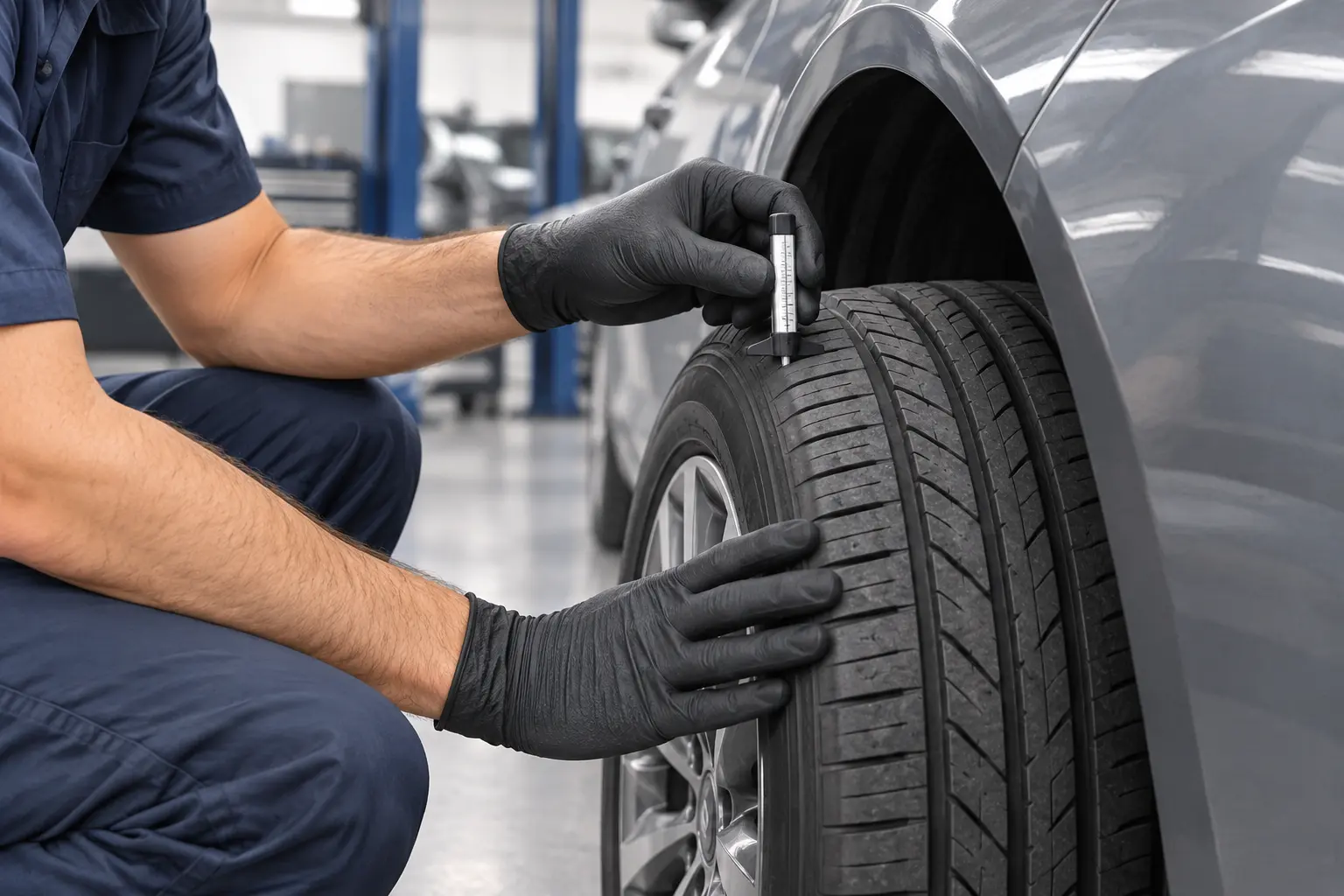
We check braking components and tire condition, including wear that may warrant closer investigation.
- Front and rear brake-pad thickness.
- Brake-caliper condition, leaks, and function.
- Brake-rotor wear, scoring, and thickness.
- Parking-brake operation.
- Tire tread depth, cupping, and uneven wear.
- Tire pressures checked against vehicle specifications.
- Spare-tire condition and pressure where supplied.
- Signs of wheel-alignment concerns.
- Jack and vehicle tools where applicable.

System Diagnostics
Our checklist includes an OBD-II diagnostic scan for active and stored fault codes. These results help identify concerns that may need further evaluation.
A fault code is a starting point for diagnosis rather than a complete explanation of a problem. We consider scan results alongside the physical inspection and vehicle operation.
Service reminders are reset when appropriate. Resetting a reminder is not a substitute for performing the required service.
Road Test, When Possible
When conditions allow, a road test helps our team evaluate how the vehicle starts, drives, steers, shifts, and stops.
- Cold and hot engine starting.
- Acceleration performance.
- Braking feel and stopping behavior.
- Suspension noise or roughness.
- Cruise-control operation where equipped.
- Idle smoothness.
- Automatic or manual transmission shifting.
- Steering alignment and responsiveness.
- Unusual vibrations or noises.
- Warning lights, including a check after the road test.
History and Inspection Work Together
A vehicle-history report can provide information about reported accidents, ownership, mileage, and maintenance. A physical inspection helps assess the vehicle's condition today.
Read Our CARFAX Guide →Care for the Car You Already Own
Our service department also helps with maintenance and repair needs. Contact us to discuss your vehicle and arrange a service visit.
Schedule Service →Frequently Asked Questions
Do you inspect used vehicles before selling them?
Yes. Our service department uses our used-car multi-point inspection checklist before a pre-owned vehicle is offered for sale. The checks cover vehicle condition, applicable equipment, diagnostics, and a road test when possible.
Do you check brakes and tires?
Yes. Our checklist includes brake pads, rotors, calipers, parking-brake operation, tire tread, tire pressures, and wear patterns.
Do you check underneath the vehicle?
Yes. The undercarriage and suspension section includes shocks, struts, joints, bushings, axles, lines, exhaust components, and visible frame or structural rust and damage.
Do you scan for diagnostic trouble codes?
Yes. Our checklist includes an OBD-II scan for active and stored fault codes. Scan findings are considered with the rest of the inspection.
Does an inspection mean the car is certified pre-owned?
An inspection alone does not establish manufacturer-certified pre-owned status. Ask about the specific vehicle's certification, if any, and its written warranty terms.
Can I ask about inspection findings before buying?
Yes. Contact our sales team about the vehicle you are considering and ask to review available inspection information and details of work performed.
Can I schedule service for a vehicle I already own?
Yes. For maintenance or repair needs on your current vehicle, schedule a service appointment or call our service department at (224) 888-4007.
An inspection reflects the vehicle's condition at the time checked and does not guarantee against future wear or repairs. Equipment and inspection access vary by vehicle. Review the vehicle's Buyers Guide and written warranty or service-contract terms for applicable coverage.